 emonster tools
Kitchen measures: spoons, cups and grams
Published
Convert spoons, cups and mL to ingredient mass with ingredient presets or your own density. For custom grams per cup, use the same cup standard as your density measurement.
Free to use. No email or account required.
Bookmark
Bookmark this tool
Save this link in your browser’s bookmarks.
Paste this link into the address of a new or existing bookmark.
On desktop, drag Kitchen measures: spoons, cups and grams to your bookmarks bar.
Only the tool’s link is shared. Your inputs and results are not included.
Share
Your inputs
Edit the example inputs to match your task. Results update as you edit.
Calculations run in your browser. Inputs are not saved or sent to analytics.
How it works
Formula
Input and formula key
Your result
Complete the inputs to see your result.
Sources
- King Arthur Baking — baker percentageSources reviewed: 2026-10-06
- King Arthur Baking — ingredient measurement referenceSources reviewed: 2026-10-06
Assumptions and limitations
Presets are approximate ingredient densities from King Arthur’s US measures; packing and temperature affect results. US cup=236.5882365 mL, tbsp=cup/16, tsp=cup/48. Metric cup=250 mL, tbsp=15 mL, tsp=5 mL; Australian tbsp=20 mL. Custom changes cup size only, with metric spoons. Custom grams-per-cup refers to the selected cup. Example: 1 US tablespoon of the flour preset ≈7.5 g.
How to use this tool
Set up the inputs
Choose volume-to-mass or mass-to-volume, an ingredient or measured custom density, and the kitchen standard. Select cups, tablespoons, teaspoons or mL, then the mass unit. For custom grams per cup, use the same cup standard as your density measurement.
Understand the result
Results include equivalent mass, volume and density. A cup diagram represents volume, not ingredient weight. Packing, humidity and ingredient form change density; use a scale for precision and check the standard, especially Australia’s different tablespoon size.
Worked examples
-
Weigh two cups of an ingredient
- 2 × 120 g = 240 g
Frequently asked questions
Why does a metric cup of the flour preset exceed 120 g?
The flour preset starts from 120 g per US cup. A metric cup holds 250 mL, which is more volume, so the same preset density gives about 126.803 g. The ingredient has not changed: the cup definition has. This distinction also affects the other ingredient presets.
Does oz mean fluid ounces here?
No. The oz option measures mass: about 28.35 g per ounce. Fluid ounces measure volume, and US and Imperial fluid ounces differ. This tool has no fluid-ounce input. A recipe quantity marked fl oz must first be expressed in the appropriate mL, rather than entered as mass ounces.
Does a custom cup also change the spoon sizes?
No. Custom changes only the cup volume. Its tablespoon remains 15 mL and its teaspoon 5 mL; they are not recalculated as fractions of your custom cup. US and Australian presets have their own spoon definitions. This matters when a recipe mixes cup and spoon measurements.
Processing and privacy
The calculation or transformation runs in your browser. The tool does not send its input values or generated output to an application server. Loading a page still makes infrastructure requests; optional analytics and Google consent messages have separate controls.
Privacy Policy. Privacy & preferences in the footer controls optional analytics.
Help and feedback
Consult the linked sources for definitions and reference data. Contact Support if you have a question or notice a problem.
Read about calculation methods · Report a problem to emonster
Related tools
Explore this subject: Cooking & drinks

Recipe scaling
Resize ingredient quantities by servings or a multiplier while retaining their entered units.
Baker percentage
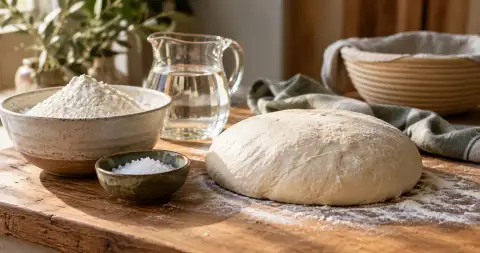
Express ingredients relative to total flour and resize a dough to your target mass.
Mass and weight converter
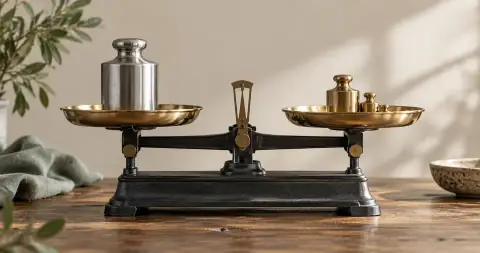
Convert mass units while keeping ordinary ounces and troy ounces distinct.