 emonster tools
Mass and weight converter
Published
Convert mass units while keeping ordinary ounces and troy ounces distinct. Check the unit on the source label before converting. For example, a kitchen scale may use ordinary ounces, while a precious-metal weight may be given in troy ounces.
Free to use. No email or account required.
Bookmark
Bookmark this tool
Save this link in your browser’s bookmarks.
Paste this link into the address of a new or existing bookmark.
On desktop, drag Mass and weight converter to your bookmarks bar.
Only the tool’s link is shared. Your inputs and results are not included.
Share
Your inputs
Edit the example inputs to match your task. Results update as you edit.
Calculations run in your browser. Inputs are not saved or sent to analytics.
How it works
Formula
- SI: kg
- Supported input limits: : 0 ≤ x ≤ 1,000,000,000,000
Input and formula key
Your result
Complete the inputs to see your result.
Sources
- NIST — conversion factor conventionsSources reviewed: 2026-10-06
- NIST — conversion factor table B.8Sources reviewed: 2026-10-06
Assumptions and limitations
Ounces and pounds are avoirdupois mass, not troy units used for precious metals. A tonne is 1,000 kg; US short and imperial long tons are separate choices. The conversion does not turn mass into force or account for local gravity.
How to use this tool
Set up the inputs
Enter the mass and choose source and destination units. Distinguish the metric tonne, US short ton and Imperial long ton, and use the ordinary ounce option only for avoirdupois mass. Precious-metal troy ounces belong in the dedicated metal-weight converter.
Worked examples
-
Check labels in pounds and tonnes
- 1 lb = 0.45359237 kg; 1 Metric tonne = 1,000 kg
Frequently asked questions
How should I read the result from Mass and weight converter?
The main result and reference table express one unchanged mass in different units. This does not convert force or determine volume. To estimate how much space a material occupies, use its appropriate density in a separate calculation; a litre does not always weigh one kilogram.
Processing and privacy
The calculation or transformation runs in your browser. The tool does not send its input values or generated output to an application server. Loading a page still makes infrastructure requests; optional analytics and Google consent messages have separate controls.
Privacy Policy. Privacy & preferences in the footer controls optional analytics.
Help and feedback
Consult the linked sources for definitions and reference data. Contact Support if you have a question or notice a problem.
Read about calculation methods · Report a problem to emonster
Related tools
Explore this subject: Unit converters

Volume converter
Convert volumes with explicit distinctions between US and imperial liquid units.
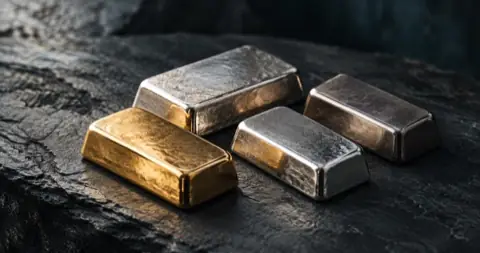
Precious-metal conversion
Estimate gold, silver, platinum or palladium value from its weight.
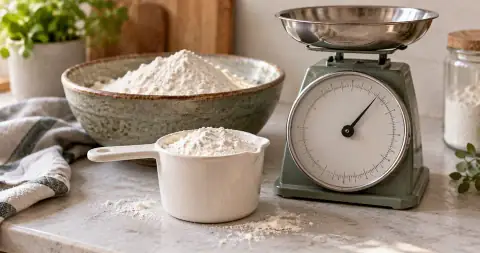
Kitchen measures: spoons, cups and grams
Convert spoons, cups and mL to ingredient mass with ingredient presets or your own density.