

Capacitor energy and charge
Calculate ideal stored energy, electric charge and energy available down to a chosen discharge cutoff voltage. Available energy is the difference between initial and cutoff stores. It is not a runtime estimate.
Free to use. No email or account required.
Bookmark
Bookmark this tool
Save this short link in your browser’s bookmarks.
Paste this link into the address of a new or existing bookmark.
On desktop, drag Capacitor energy and charge to your bookmarks bar.
Only the tool’s link is shared. Your inputs and results are not included.
Share
Your inputs
Edit the example inputs to match your task. Results update as you edit.
Calculations run in your browser. Inputs are not saved or sent to analytics.
How it works
Formula
Input and formula key
Your result
Complete the inputs to see your result.
Sources
- OpenStax — energy stored in capacitorsSources reviewed: 2026-10-30
Assumptions and limitations
Ideal constant capacitance. Excludes ESR, leakage, tolerance and converter losses. Energy calculations do not establish a safe voltage or discharge procedure; follow component ratings and handling instructions.
How to use this tool
Set up the inputs
Enter capacitance in microfarads, initial voltage and cutoff voltage. The cutoff must be between zero and the initial voltage.
Worked examples
-
Find the energy stored at 12 volts
1,000 µF = 0.001 F; 0.5 × 0.001 × 12² = 0.072 J; 0.001 × 12 = 0.012 C.
Frequently asked questions
How should I read the result from Capacitor energy and charge?
Initial energy is the full store. Available energy is the difference between initial and cutoff stores; it is not a runtime estimate.
Processing and privacy
The calculation or transformation runs in your browser. The tool does not send its input values or generated output to an application server. Loading a page still makes infrastructure requests; optional analytics and Google consent messages have separate controls.
Privacy Policy. Privacy & preferences in the footer controls optional analytics.
Help and feedback
Consult the linked sources for definitions and reference data. Contact Support if you have a question or notice a problem.
Read about calculation methods · Report a problem to emonster
Related tools
Explore this subject: Technology

Battery runtime
Estimate ideal runtime from battery energy, usable capacity, efficiency and load.
Series and parallel components
Combine up to twelve resistors or capacitors and compare series and parallel equivalents.
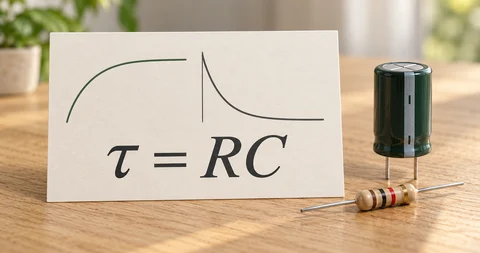
RC charging and discharging
Explore capacitor voltage over time, time to a target voltage and the RC time constant.